1. Three copies: which pair opens a follow-up?
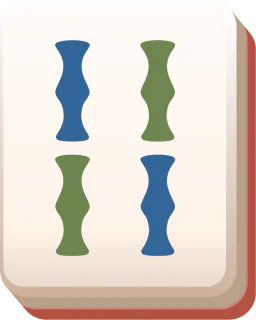 A
A XB
XB HiddenCD
Read the reasoning
Choose A + C. Removing C uncovers the white dragon, which can then match D. Removing A also gives X a free left side. You have opened a specific follow-up pair instead of merely reducing the count.
A + B is legal, but leaves C covering that dragon. B + C would also uncover it; the important part is including C. C + D is not a match because bamboo and dragons are different types.
On a real board the covered picture may be unknown. Do not assume you know it: compare visible consequences first, then favor a move that exposes useful new information.
2. Different pictures can still form a pair
 AB
AB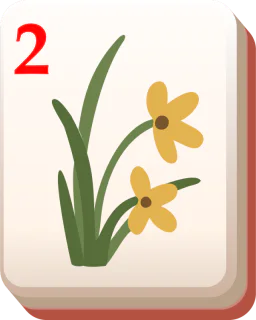 C
C D
DRead the reasoning
Choose A + C. Both ends are open, and two flowers match even with different pictures and numbers. Removing them frees B from both sides.
A + D is invalid because a flower cannot match a season. B + D is also invalid: they are different tile types, and B is blocked on both sides before the flowers are removed.
Do not save flowers automatically. In this position the flower pair opens the row, so using it has a concrete benefit. Preserve flexibility only when another move does at least as much work.
3. Keep a partner for the trapped copy
 AB
AB XCD
XCDRead the reasoning
Choose A + C, then B + D. A leaves first, giving B a free left side. D remains available as B's partner. A + D followed by B + C works for the same reason.
C + D is legal but spends both free-standing partners. A and B then remain in the row, with B still blocked. Another move involving X might rescue a full board, but no such rescue is available in this excerpt. A + B cannot be the first move because B is not open.
The general lesson is to trace the order of access when copies share a row or stack. A high Open Matches count does not tell you which choice preserves that order.
A repeatable Turtle-board routine
Before the first pair, use the stopped clock to inspect three areas: the single top tile, the long outside rows, and any symbol with three visible open copies. Look for a move that changes at least one of those areas.
- Look upward: identify what supports the highest tile. When its partner is available, removing that pair can reveal more choices. Do not treat height as an absolute rule if an edge move unlocks a known partner.
- Look sideways: scan from the ends of long rows toward the center. One open end can release a sequence of tiles. Clearing two isolated tiles may do much less.
- Look one pair ahead: name the next pair your move will make possible. If you cannot name one, compare how many new tiles each candidate exposes.
- Recount after removal: do not finish a memorized chain without checking newly opened tiles. The best continuation can change after every match.
Balance the clock against the board
Quick-chain points encourage consecutive matches within eight seconds, but a clear board also earns 5,000 bonus points. It can be worth losing a quick-chain bonus to inspect a three-copy choice. You never lose existing points merely by taking time to think.
Hint is most useful when you cannot locate a legal pair. It does not grade moves by the number of tiles they uncover. After the first match, compare the next hint cost with your score and remaining time. Repeatedly requesting the same pair costs no extra points, but it will not produce a better plan.
At the end, use the completion percentage as feedback. If a long row remains, practice freeing its ends earlier. If several matching copies remain stacked, look for a partner you used before its trapped copy became available. Not every loss can be predicted from visible information.